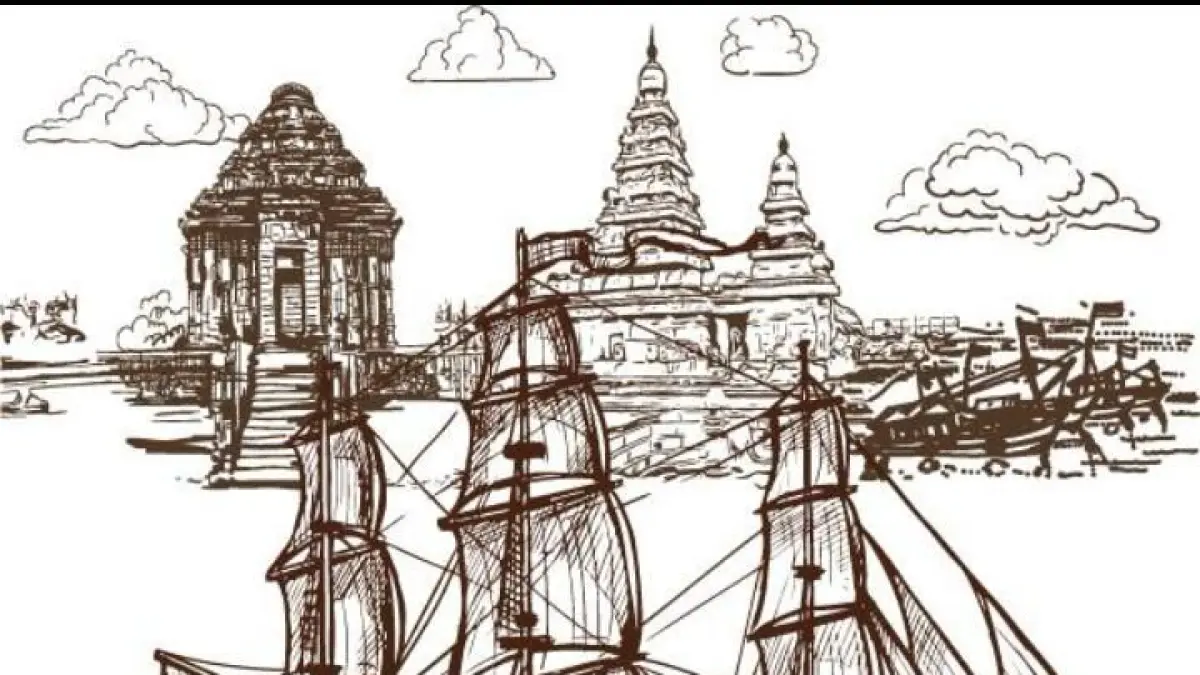
TRENGGALEK - The Majapahit Empire remains one of the most influential kingdoms in Southeast Asian history, known for its vast territorial reach and powerful maritime influence. Historians consider the Majapahit Empire a symbol of Indonesia’s ancient glory because of its role in shaping trade, politics, and culture across the Nusantara region.
The kingdom was founded in East Java in 1293 by Raden Wijaya following political conflict on the island of Java. Over time, Majapahit transformed from a regional kingdom into a dominant empire that controlled strategic trade routes throughout Southeast Asia.
The rise of the Majapahit Empire accelerated during the reign of King Hayam Wuruk, who ruled alongside the famous military commander Gajah Mada. Under their leadership, the kingdom expanded its influence across large parts of the Indonesian archipelago and strengthened diplomatic ties with neighboring territories.
Gajah Mada became a legendary figure after declaring the “Sumpah Palapa,” an oath promising to unite Nusantara under Majapahit authority. Historians often describe this moment as one of the most important political visions in Indonesia’s ancient history.
At its peak, the Majapahit Empire developed into a major center for international trade. Merchants from China, India, and the Middle East visited its ports to exchange spices, textiles, ceramics, and precious metals. The kingdom’s strong naval power helped secure maritime routes and maintain economic stability throughout the region.
Beyond military and economic strength, the Majapahit Empire also became known for its cultural achievements. Literature, architecture, and religious traditions flourished during the kingdom’s golden age. Ancient temples and historical manuscripts from the era continue to attract researchers and tourists from around the world.
One of the most important historical sources from the Majapahit period is the “Nagarakretagama,” a manuscript that documents royal ceremonies, political administration, and territorial influence. The text remains a valuable reference for historians studying early Indonesian civilization.
Despite its success, the Majapahit Empire eventually entered a period of decline during the 15th century. Internal disputes, struggles for succession, and the rapid growth of Islamic kingdoms weakened Majapahit’s authority across the archipelago.
The fall of the empire marked the end of one of Southeast Asia’s greatest maritime powers. However, the legacy of Majapahit continues to shape Indonesian identity and historical awareness today.
Modern historians view the Majapahit Empire as evidence that the Nusantara region once hosted advanced civilizations capable of competing economically and politically with major powers in Asia. Its history remains an important part of Indonesia’s cultural heritage and national narrative.
Editor : Ingge Nayla Ayu KarinaSumber : DIOLAH, youtube