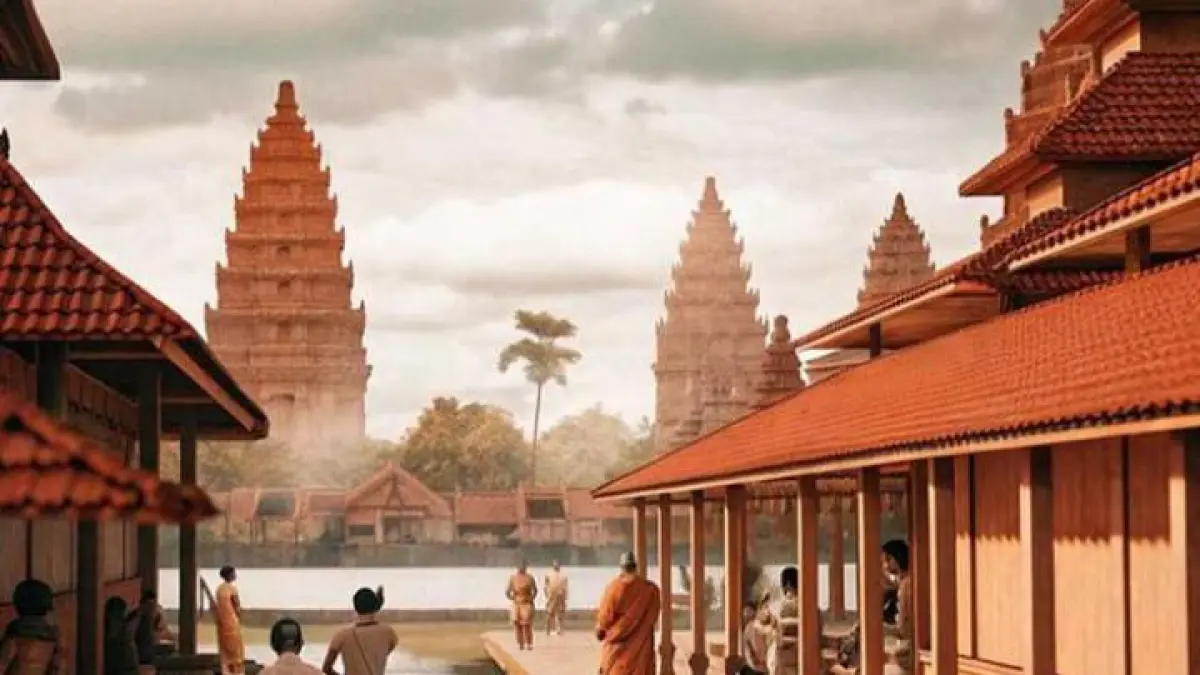
TRENGGALEK - The Mataram Kingdom is considered one of the oldest and most influential kingdoms in Indonesian history, playing a major role in shaping early civilization on the island of Java. Historians say the Ancient Mataram Kingdom became a center of political power, religion, and culture during its peak between the 8th and 10th centuries.
Located in Central Java, the Ancient Mataram Kingdom developed rapidly because of fertile land and strong agricultural systems. The kingdom was known for its advanced governance and its ability to unite several regions under a centralized political structure.
The history of the Mataram Kingdom is closely linked to two major ruling dynasties, the Sanjaya Dynasty and the Syailendra Dynasty. These dynasties influenced the kingdom’s religious and cultural identity, with Hinduism and Buddhism both playing important roles in society.
One of the greatest achievements of the Ancient Mataram Kingdom was the construction of monumental temples that still stand today. The famous Borobudur Temple, recognized as the world’s largest Buddhist temple, was built during the Syailendra Dynasty. Meanwhile, the magnificent Prambanan Temple became a symbol of Hindu architectural excellence from the Sanjaya Dynasty period.
Historians believe the Mataram Kingdom maintained strong trade and diplomatic relations with neighboring regions in Southeast Asia. Agricultural production, especially rice farming, became one of the kingdom’s economic foundations, supporting population growth and political stability.
Ancient inscriptions discovered across Central Java provide important information about the kingdom’s rulers, social systems, and religious practices. These historical records show that the Mataram Kingdom possessed a sophisticated administration for its time.
Despite its success, the Ancient Mataram Kingdom eventually faced major challenges. Natural disasters, including possible volcanic eruptions from Mount Merapi, along with political conflict and shifting economic centers, weakened the kingdom’s influence in Central Java.
During the 10th century, the kingdom’s political center gradually moved to East Java under the leadership of Mpu Sindok. Historians consider this relocation one of the most significant turning points in early Javanese history.
Although the Ancient Mataram Kingdom eventually declined, its cultural legacy continues to shape Indonesia today. Temples, inscriptions, and archaeological discoveries from the era remain among the country’s most important historical treasures.
Modern researchers view the Mataram Kingdom as evidence of the advanced civilization that once flourished in Java long before the colonial period. Its contributions to architecture, religion, and governance continue to attract historians and tourists from around the world.
Editor : Ingge Nayla Ayu KarinaSumber : You Tube, DIOLAH