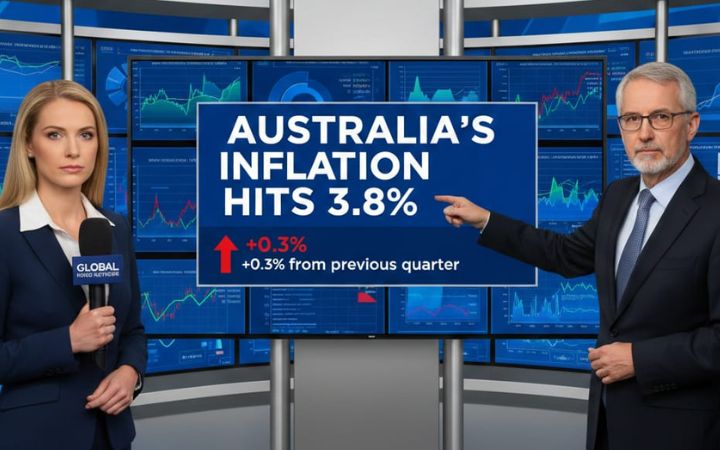
JAKARTA - Australia's inflation rate of 3.8 percent is back in the spotlight after the latest data released today showed a higher-than-expected surge.
Headline inflation in Australia was recorded at 3.8 percent, exceeding analysts' expectations, which had previously projected inflation to be in the range of 3.6 percent.
Australia's inflation rate of 3.8 percent immediately sparked strong speculation that the Reserve Bank of Australia (RBA) would almost certainly raise interest rates at its meeting next week.
This latest news was delivered directly by business editor Ross Greenwood in a live broadcast, confirming that Australia's inflation release effectively locks in the direction of future monetary policy.
With inflationary pressures rising again, the central bank's room to maintain low interest rates is narrowing.
Australia's Inflation Above Central Bank Target
In his statement, Ross Greenwood explained that in addition to headline inflation of 3.8 percent, the RBA's main concern was actually underlying inflation or trimmed mean inflation.
Data shows that core inflation is now at 3.3 percent, a significant increase from the previous level of 3 percent.
This figure is above the Australian Central Bank's inflation target range of 2–3 percent.
In fact, the previous inflation trend had shown a decline, which was the basis for three interest rate cuts throughout 2025. However, that trend has now reversed.
The combination of rising inflation and a solid labor market has exacerbated price pressures.
Lower-than-expected unemployment rates have driven wage increases, which in turn have contributed to overall inflation.
Interest Rates Predicted to Rise Starting Next Week
Given this situation, Ross Greenwood believes that the RBA has little choice but to raise interest rates.
Interest rates are the central bank's only major instrument for curbing rising inflationary pressures.
The money market is also responding quickly to this data. Before the inflation release, the probability of an interest rate hike at next week's meeting was at 60 percent.
However, within minutes of the data being announced, the odds jumped to 70 percent.In fact, the market expects that interest rate hikes will not stop at just one.
The latest projections indicate the potential for further increases in July or August, as well as the possibility of one more hike before December 2026, if inflationary pressures continue.
Australian Dollar Strengthens, Stock Market Under Pressure
The release of higher-than-expected Australian inflation figures also had an immediate impact on financial markets.
The Australian dollar surged and broke through the US 70 cent level, reaching its highest position in nearly three years.
This surge reflects market expectations of tighter monetary policy.On the contrary, the stock market reacted negatively.
The ASX 200 index, which had been moving in positive territory and approaching the 9,000-point level, reversed course and weakened after the inflation data was announced.
This pressure reflects investor concerns about the impact of interest rate hikes on corporate performance and domestic consumption.
Meanwhile, one-year bond yields also rose, albeit relatively modestly.This movement is in line with market expectations of monetary policy tightening in the near future.
Housing and Healthcare Prices Drive Inflation
Detailed inflation data shows that several sectors are still experiencing significant price increases.
Housing prices continue to strengthen, becoming one of the main contributors to inflation. Healthcare costs are also showing a consistent upward trend.
Meanwhile, clothing prices have declined compared to the previous period, but food and beverage prices have risen again.
Overall, most major sectors remain above the ideal inflation level desired by the Reserve Bank of Australia.
Given these conditions, the market believes that an interest rate hike is an inevitable scenario.
If price pressures do not ease soon, tighter monetary policy is likely to be a major theme throughout the year. (*)
Editor : Didin Cahya FirmansyahSumber : DIOLAH